
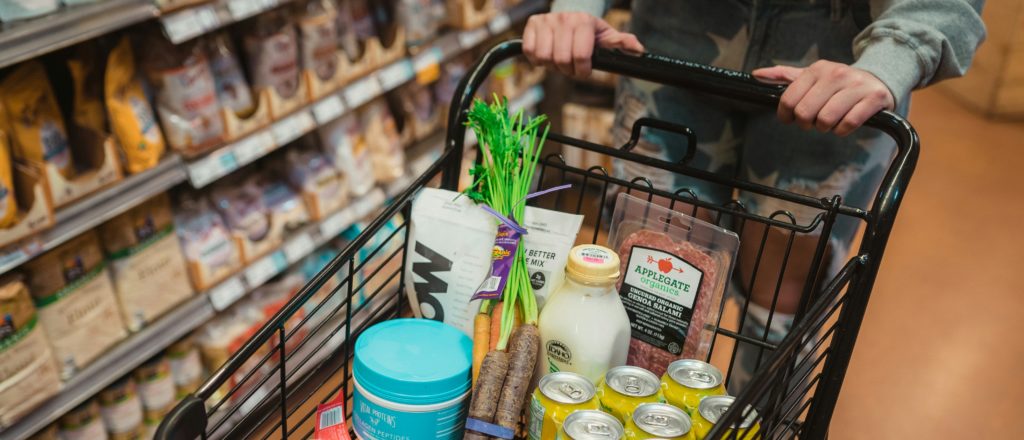
Nearly everyone is concerned about the rising cost of everything from groceries to health care to housing. But now there’s a crazy new antitrust legal theory that could make every day purchases MORE expensive.
Under this theory it could become illegal for a Walmart, Safeway or Amazon to seek savings from discount purchases of everything from soft drinks, meats, clothing and toothpaste to pass on to consumers. Trial lawyers argue that “volume purchasing” gives an unfair advantage to the nationwide retailers of the world over smaller retailers and merchants. No more volume discounts.
A new lobbying group called the Main Street Competition Coalition aims to re-weaponize a Depression-era law to do just this. The Robinson-Patman Act (RPA) should have long ago been repealed but wasn’t because no one took the antiquated relic seriously after courts and regulators abandoned and limited it.
Then came Biden Federal Trade Commission (FTC) Chair Lina Khan — an Antitrust super-regulator — who wanted to use that law as a sword against suppliers to big discount retailers. She sued Pepsi for volume discounts selling its soft drinks. Nevermind this turned antitrust law on its head — after all antitrust protections are supposed to prevent using market power to raise consumer prices, not lower them.
The good news is that Lina’s gone and the Trump administration’s Justice Department and FTC have laughed this legal theory that cutting prices should be illegal out of the building. How can a business practice that benefits consumers be forbidden?
It’s especially nefarious because it will be the most disadvantaged families – rural Americans, those working paycheck to paycheck, immigrants and minorities — who depend on volume discounts to keep food on the table, who will be the victims.
The legal argument for RPA is based on the fear that big discount retailers can run the little local stores out of business and then raise prices later. But box retailers are in nearly every town in America today and still reliably provide the lowest cost option, all while smaller local stores haven’t disappeared from the landscape.
Instead, the big box stores compete aggressively against each other to keep pushing prices down for everyone.
Volume discounting isn’t “price discrimination” as the trial lawyers argue. In reality, big volume purchases are a routine business practice that fights against inflation and drives prices downward. In economics jargon it’s called economies of scale.
With the Trump administration rightly hostile to these cases and with Congress unlikely to pass new attempts to reinvigorate the RPA — the trial lawyers are now taking their complaints to the courtrooms as their new arena in their fight to define price discount “price discrimination.”
In the FTC’s abusive PepsiCo case under Khan, the company was brought to task for making volume deals that let families buy soda 12-packs for a few bucks — not at a dollar per can. That’s a crime? Who’s the victim?
In a recent case known as “New York’s Oreos meltdown,” Mondelez, the maker of Oreos, Ritz, and Wheat Thins, quit direct deliveries to 1,000 NYC indie grocers citing parking and delivery woes — while serving ShopRite and Wegmans.
Indies now pay wholesalers extra, jumping $5.99 Oreos to $6.99, which was alleged to be a Robinson-Patman Act violation by the National Supermarket Association. New York Mayor Zohran Mamdani’s Consumer Grocery Price Fairness Act would ban favoring chains. That will likely mean not lower prices at Indies but higher prices at Wegmans and ShopRite. So everyone’s Oreos will cost more.
A recent study estimates the harm from this Robinson-Patman type revival. The lawsuits could spike grocery prices 5-10% while gutting affordable options, slamming rural families and low-income communities hardest. The study estimates $500 extra costs for the typical family’s grocery bill.
This is no prescription to the post-Biden inflation hangover and will surely make the battle over rising prices even harder to win.
Stephen Moore is a co-founder of Unleash Prosperity and a senior fellow at America First Policy Institute. He served as a senior economic advisor to Donald Trump.
The views and opinions expressed in this commentary are those of the author and do not reflect the official position of the Daily Caller News Foundation.
All content created by the Daily Caller News Foundation, an independent and nonpartisan newswire service, is available without charge to any legitimate news publisher that can provide a large audience. All republished articles must include our logo, our reporter’s byline and their DCNF affiliation. For any questions about our guidelines or partnering with us, please contact licensing@dailycallernewsfoundation.org.